








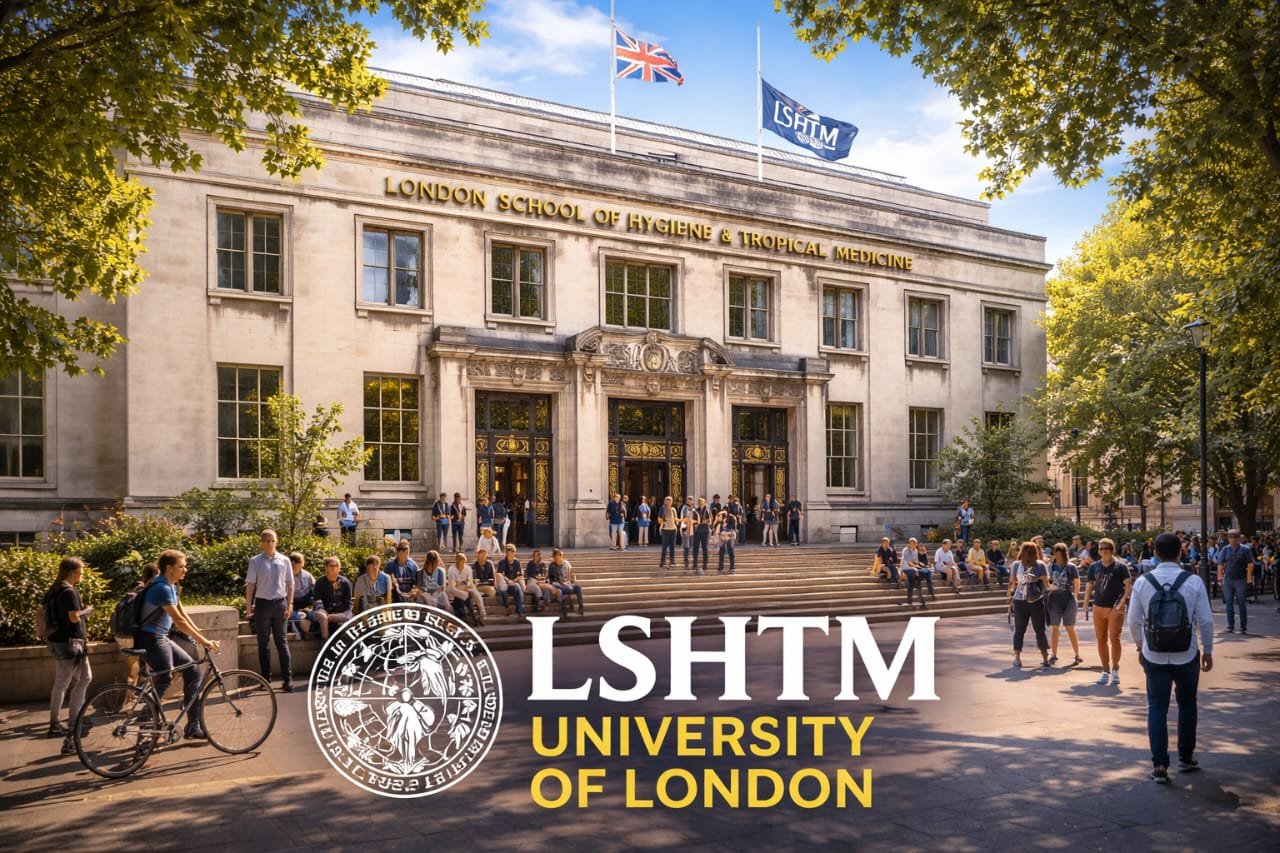
Most people scroll past job listings asking for a “master’s in public health” without realizing there’s one school that practically owns the field. That school is sitting quietly in Bloomsbury, London, changing how the world fights disease.
3 Key Takeaways
“1. Global Health Powerhouse:” LSHTM University of London ranks >1 worldwide for public health and tropical medicine, outpacing Harvard and Johns Hopkins in specialized research impact.
“2. Career Acceleration:” 94% of graduates land jobs within six months, with alumni leading responses to Ebola, COVID-19, and malaria eradication programs across 190 countries.
“3. Real-World Focus:” Unlike traditional universities, LSHTM operates like a research institute. You’ll work on live disease outbreaks, policy briefs for WHO, and fieldwork from day one.
What Actually Is LSHTM University of London?
The London School of Hygiene & Tropical Medicine (LSHTM) is a postgraduate university specializing in public health and tropical medicine. Founded in 1899, it’s part of the University of London but operates independently.
Here’s what makes it different. LSHTM University of London doesn’t do undergraduate degrees. Everyone here is either pursuing a master’s, PhD, or research fellowship. You’re surrounded by people who’ve already decided that infectious diseases, health policy, or epidemiology is their life’s work.
The school employs over 1,400 staff across three main faculties: Epidemiology & Population Health, Infectious & Tropical Diseases, and Public Health & Policy.
Research That Changes Policy
The school doesn’t just study problems. It solves them:
“Malaria nets:” LSHTM research proved insecticide-treated bed nets could cut child deaths by 20%. Now 2 billion nets protect families in Africa.
“Tobacco control:” Studies from LSHTM University of London convinced the UK to ban smoking in public spaces, a model copied by 55 countries.
“Ebola response:” During the 2014 West Africa outbreak, LSHTM teams were on the ground in Guinea and Sierra Leone, training local health workers and tracking transmission.
What Programs Does LSHTM Offer?
Master’s Degrees (MSc)
Programs run 1 year full-time or 2-3 years part-time:
• Public Health (the generalist option)
• Epidemiology (for data lovers)
• Control of Infectious Diseases (field-focused)
• Global Health Policy (for future WHO advisors)
• Medical Parasitology
You can also do these programs by distance learning. LSHTM pioneered online public health education in 1998.
Research Degrees (MPhil/PhD)
The PhD route takes 3-4 years. You’ll need a strong research proposal and a faculty member willing to supervise you.
Short Courses
LSHTM runs week-long intensive courses on everything from outbreak investigation to health economics. Professionals fly in from ministries of health worldwide.
The Student Experience
Who You’ll Study With
Your classmates will include doctors from Kenya who’ve treated drug-resistant TB, policy analysts from Brazil’s health ministry, and biostatisticians who worked at Pfizer. The average age is 28. Nearly 70% of students come from outside the UK.
The Teaching Method
Most learning happens through:
“Group projects:” Design a vaccination campaign for measles in a fictional country with limited infrastructure.
“Data analysis workshops:” Use real malaria surveillance data to identify outbreak patterns.
“Guest speakers:” The person who eradicated smallpox might drop by to discuss lessons learned.
Career Paths After LSHTM
Where Graduates Actually Work
“International organizations:” WHO, UNICEF, Gavi, The Global Fund
“Government agencies:” CDC, NHS, Public Health England
“NGOs:” Save the Children, PATH, Clinton Health Access Initiative
“Private sector:” Pharmaceutical companies, health tech startups, consulting firms
Starting salaries vary wildly. NGO jobs might pay £30,000-40,000. Pharma consulting can start at £60,000+.
Admission Requirements
Academic Prerequisites
You’ll need a bachelor’s degree (typically a 2:1 or equivalent). LSHTM cares more about your potential than your pedigree. A 2:2 from a decent university plus two years working for an HIV clinic in Uganda beats a first-class degree with no real-world experience.
English Language Requirements
“IELTS:” 7.0 overall (6.5 minimum in each section)
“TOEFL:” 100 overall
The Personal Statement
LSHTM wants to know why public health, why this program, and what’s your career goal. Be specific. Vague statements about “making a difference” go straight to the rejection pile.
Tuition and Funding
What It Costs
“UK students:” £12,000-14,000 annually
“International students:” £24,000-28,000 annually
Living in London adds another £15,000-20,000 per year. Budget £40,000-50,000 total for international students.
Scholarships
LSHTM distributes over £5 million in scholarships annually. About 30% of students receive some funding. Apply early (January for September entry).
How LSHTM Compares to Competitors
LSHTM offers something American schools can’t match: proximity to the UK’s National Health Service, Europe’s health systems, and African field sites. It’s also dramatically cheaper for international students while maintaining equal research quality in tropical medicine and infectious diseases.
Is LSHTM Right for You?
This school works best for people who:
• Already know they want a career in global health
• Can handle ambiguity and messy, real-world problems
• Want to work internationally
• Prefer substance over prestige
It’s not the right fit if you’re still exploring career options or need a big campus with lots of student activities.
Frequently Asked Questions
What is LSHTM University of London known for?
LSHTM is the world’s leading institution for public health and tropical medicine research. It ranks >1 globally in these fields and has shaped international health policy for over a century.
How hard is it to get into LSHTM?
Acceptance rates hover around 30-40% for master’s programs. Strong academic records matter, but relevant work experience can compensate for modest grades.
Is LSHTM a Russell Group university?
No, LSHTM is a specialist postgraduate institution. It’s part of the University of London federation and focuses exclusively on research and graduate education.
Can you study at LSHTM online?
Yes, you can complete most master’s programs entirely online over 2-3 years while working. Online students get the same University of London degree as on-campus students.
What is the average salary after LSHTM?
UK government positions start around £30,000-40,000. International organizations offer £40,000-60,000 for entry roles. Private sector jobs can start at £60,000-80,000.
Does LSHTM offer undergraduate programs?
No, LSHTM only offers postgraduate degrees (master’s and PhD). The minimum entry requirement is a completed bachelor’s degree.
How long is the LSHTM master’s program?
Full-time master’s programs run 12 months. Part-time options take 2-3 years. Distance learning programs typically span 2.5-5 years.
What GPA do you need for LSHTM?
LSHTM requires a UK 2:1 or equivalent (roughly a 3.3-3.5 US GPA). However, applicants with a 2:2 plus significant relevant work experience are often accepted.
Conclusion and Recommendations
LSHTM University of London isn’t for everyone. But if you’ve already decided that fighting disease, shaping health policy, or conducting fieldwork is your calling, there’s no better training ground.
My Honest Recommendations
“Apply if:” You have at least one year of relevant work experience in healthcare, development, or research. LSHTM values practical knowledge.
“Choose distance learning if:” You’re already working in public health and want credentials without pausing your career.
“Budget realistically:” If you’re an international student without significant savings or scholarships, consider whether £40,000-50,000 in debt is manageable given public health salaries.
“Visit if possible:” LSHTM runs open days and webinars. Talking to current students gives you a better sense of whether the intense, research-focused culture fits your personality.
The world genuinely needs more people trained in infectious disease control and evidence-based policy. LSHTM produces those people more effectively than perhaps any institution on Earth.


