








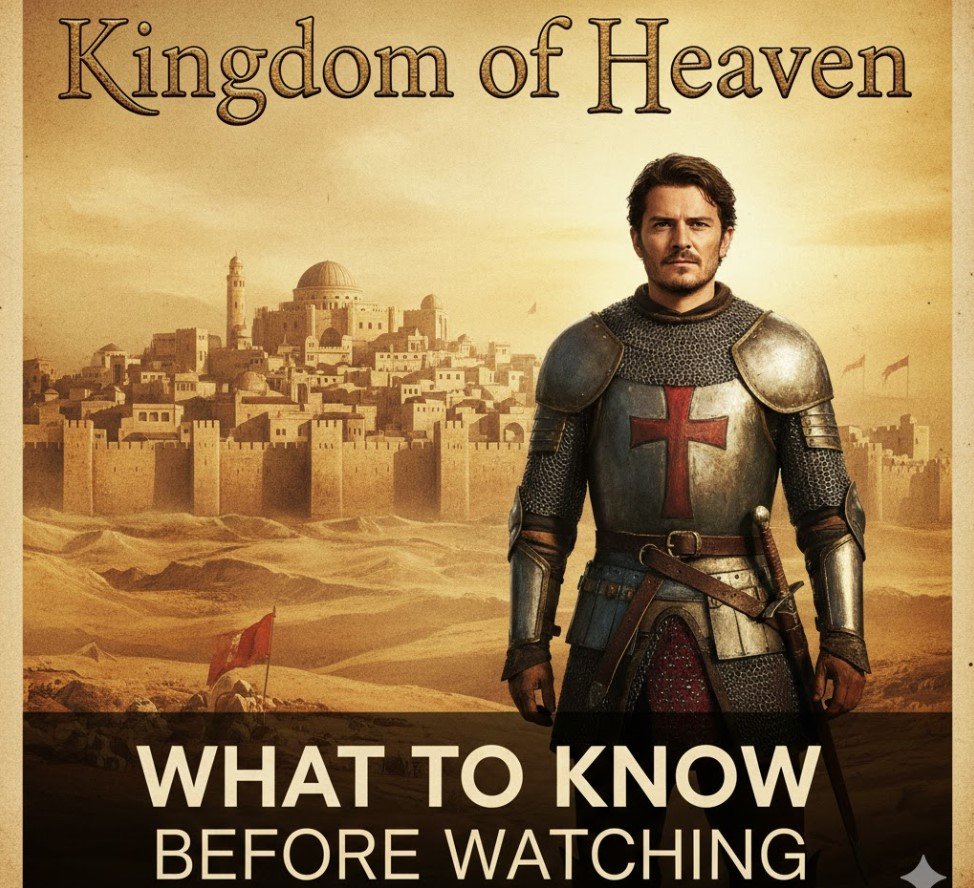
If you are planning to watch Ridley Scott’s epic historical drama Kingdom of Heaven, there are several important aspects worth understanding in advance to fully appreciate the film’s depth, symbolism, and historical scope. Knowing what to know before watching Kingdom of Heaven can significantly enhance your viewing experience, especially since the movie blends real historical events with dramatic interpretation, philosophical themes, and visually stunning storytelling. Released in 2005, Kingdom of Heaven explores the Crusades through a humanistic lens, focusing less on glorifying war and more on moral conflict, faith, tolerance, and leadership during one of history’s most turbulent periods.
This guide provides a comprehensive and SEO-friendly exploration of what to know before watching Kingdom of Heaven, helping both first-time viewers and returning audiences understand the film’s background, historical accuracy, major characters, themes, and the crucial differences between the theatrical and director’s cuts. Written with clarity and authority, this article draws on historical scholarship, cinematic analysis, and audience insights to deliver a complete pre-viewing resource.
Understanding the Historical Setting of Kingdom of Heaven
One of the most essential things to know before watching Kingdom of Heaven is its historical context. The film sets its story in the late twelfth century, primarily between 1184 and 1187, during the Crusades. Intense religious conflict between Christian and Muslim forces over control of Jerusalem—sacred to Christians, Muslims, and Jews alike—defined this era.
At the center of the story is the Kingdom of Jerusalem, a Christian-ruled state established after the First Crusade. By the time the film begins, the kingdom is politically fragile, internally divided, and under constant threat from Muslim forces led by the famed general Saladin. Understanding this background helps viewers grasp why the stakes in the film are so high and why seemingly personal decisions carry massive political and spiritual consequences.
Also Read: Volleyball Legends Codes A Complete and Trusted Guide for Players
Historically, Jerusalem during this period was a melting pot of cultures, religions, and ethnicities. Trade, diplomacy, and uneasy truces existed alongside violence and mistrust. Kingdom of Heaven attempts to portray this complexity rather than presenting a simplistic good-versus-evil narrative, which is a crucial point to keep in mind before watching.
The Real History Versus Cinematic Interpretation
Another important element in what to know before watching Kingdom of Heaven is recognizing how the film balances historical fact with artistic license. While the movie is inspired by real people and events, it is not a documentary. Ridley Scott and screenwriter William Monahan adapted history to serve the film’s themes and narrative flow.
The protagonist, Balian of Ibelin, was a real historical figure, but his portrayal in the film differs significantly from historical records. In reality, Balian was a nobleman from a powerful family, well-educated and deeply involved in Jerusalem’s politics long before the events depicted. The film reimagines him as a blacksmith who rises to nobility through personal growth and moral conviction. This change was made to create a more accessible hero’s journey for modern audiences.
Similarly, characters such as King Baldwin IV, Guy de Lusignan, Sibylla, and Saladin are rooted in history but shaped to emphasize particular traits. Understanding this blend of truth and fiction allows viewers to appreciate the film as a historical drama rather than judging it solely on factual precision.
The Importance of the Director’s Cut
When discussing what to know before watching Kingdom of Heaven, it is impossible to ignore the significance of the director’s cut. The theatrical release of the film received mixed reviews, with critics often citing pacing issues and underdeveloped characters. However, the director’s cut, which adds nearly forty-five minutes of additional footage, dramatically improves narrative coherence and character depth.
The extended version restores crucial subplots, particularly those involving Sibylla and her son, which provide emotional weight and clearer motivations for key decisions. Political intrigue within Jerusalem is also more fully explored, making the conflict feel more grounded and believable. Many critics and fans consider the director’s cut to be one of the finest examples of how additional context can transform a film.
Also Read: Who Is Michelle Smallmon Biography
Before watching Kingdom of Heaven, it is highly recommended to seek out the director’s cut if possible. Doing so provides a richer, more satisfying experience and aligns more closely with Ridley Scott’s original vision.
Key Characters and Their Roles
Understanding the main characters is a vital part of what to know before watching Kingdom of Heaven. Each central figure represents different philosophies, moral positions, and responses to power and faith.
Balian, portrayed by Orlando Bloom, serves as the moral center of the film. His journey from grief-stricken blacksmith to defender of Jerusalem reflects themes of redemption, responsibility, and the search for meaning beyond rigid religious dogma. His skepticism toward institutional religion contrasts with his belief in ethical action and compassion.
King Baldwin IV, played by Edward Norton, is one of the film’s most compelling characters. Afflicted with leprosy, Baldwin rules Jerusalem with wisdom and restraint, striving to maintain peace despite immense pressure from extremist factions. His character symbolizes enlightened leadership and the tragic cost of maintaining balance in a divided world.
Saladin, portrayed with dignity and restraint by Ghassan Massoud, is depicted as a noble and pragmatic leader rather than a villain. His portrayal challenges stereotypical depictions of Muslim leaders in Western cinema and underscores the film’s emphasis on mutual respect and honor.
Also Read: Who Is Andre Pigford? All About Eva Marcille’s Brother
Supporting characters such as Sibylla, Guy de Lusignan, Tiberias, and Reynald de Châtillon each play crucial roles in illustrating the spectrum of motivations that drive the conflict, from ambition and fanaticism to pragmatism and sacrifice.
Central Themes You Should Recognize
One of the most valuable insights into what to know before watching Kingdom of Heaven involves understanding its central themes. The film is less about religious conquest and more about moral philosophy, coexistence, and the human cost of war.
A dominant theme is the idea of tolerance. Through its narrative, Kingdom of Heaven suggests that peaceful coexistence is possible when leaders act with wisdom and restraint. The city of Jerusalem itself becomes a symbol not just of religious significance but of shared humanity.
Another key theme is the nature of true faith. The film repeatedly questions whether faith is defined by rigid adherence to doctrine or by ethical behavior and compassion toward others. Balian’s famous line about what makes a man righteous encapsulates this idea and resonates throughout the story.
Power and responsibility also play central roles. Characters who seek power for personal gain often bring destruction, while those who reluctantly accept responsibility tend to act more justly. This contrast reinforces the film’s critique of fanaticism and blind ambition.
Visual Style and Cinematic Scale
Before watching Kingdom of Heaven, it is helpful to appreciate its visual and technical ambitions. Ridley Scott is known for his mastery of epic scale, and this film is no exception. Sweeping desert landscapes, meticulously designed sets, and large-scale battle sequences contribute to an immersive experience.
Also Read: Meet Charity Nye Growing Up as Bill Nye’s Daughter Away from
The cinematography emphasizes both grandeur and intimacy. Wide shots of armies and cities convey the vastness of the conflict, while close-ups during personal moments highlight the emotional stakes. The production design reflects extensive research into medieval architecture, armor, and weaponry, lending authenticity to the world on screen.
The musical score, composed by Harry Gregson-Williams, further enhances the atmosphere by blending orchestral themes with Middle Eastern influences. This auditory backdrop reinforces the film’s cultural duality and emotional depth.
Historical Accuracy and Scholarly Perspectives
A frequent question tied to what to know before watching Kingdom of Heaven concerns its historical accuracy. Scholars generally agree that while the film captures the broad political dynamics of the period, it simplifies or alters many details for dramatic effect.
For example, the portrayal of religious tolerance in Jerusalem under Christian rule is somewhat idealized. While there were periods of relative coexistence, tensions and discrimination certainly existed. Similarly, the motivations of historical figures were often more complex than the film suggests.
Also Read: Cracker Barrel Menu for Today’s Specials: Delicious Daily Selections You Can’t Miss!
However, many historians praise the film for humanizing both sides of the conflict and avoiding overtly propagandistic messaging. By focusing on shared values and moral dilemmas, Kingdom of Heaven encourages viewers to reflect on history rather than simply consume it as spectacle.
Why the Film Remains Relevant Today
Understanding what to know before watching Kingdom of Heaven also involves recognizing its modern relevance. Although set in the medieval past, the film addresses issues that continue to resonate today, including religious extremism, cultural conflict, and the challenges of leadership in divided societies.
The movie’s emphasis on dialogue over violence and ethical action over blind allegiance speaks directly to contemporary global tensions. By framing historical conflict through a humanistic lens, Kingdom of Heaven invites audiences to consider how lessons from the past might inform present and future choices.
Common Misconceptions Before Watching
Some viewers approach Kingdom of Heaven expecting a straightforward action film focused on crusader battles. Knowing in advance that the movie prioritizes philosophical reflection and character development can help set appropriate expectations. While there are impressive battle scenes, the heart of the film lies in its dialogue and moral exploration.
Another misconception is that the film takes a strictly anti-religious stance. In reality, Kingdom of Heaven critiques fanaticism rather than faith itself. The film portrays characters who practice humility and compassion positively, regardless of their religious affiliation.
Preparing for the Viewing Experience
To get the most out of the film, it helps to watch it with patience and attentiveness. The narrative unfolds deliberately, and many of its most powerful moments are subtle rather than explosive. Watching the director’s cut in a distraction-free environment allows the themes and character arcs to fully resonate.
Having a basic understanding of Crusader history, the significance of Jerusalem, and the major historical figures involved can deepen your appreciation, but the film is also accessible to viewers without prior knowledge.
Conclusion
In summary, knowing what to know before watching Kingdom of Heaven can transform the film from a visually impressive historical drama into a deeply meaningful cinematic experience. By understanding its historical context, recognizing the balance between fact and fiction, appreciating the importance of the director’s cut, and engaging with its central themes, viewers can approach the film with informed expectations and a richer perspective.
Also Read: Lewis Center Ohio Champion Trees Nature’s Towering Legacy
Kingdom of Heaven stands as a thought-provoking exploration of faith, power, and humanity set against one of history’s most complex periods. Whether you are interested in history, philosophy, or epic storytelling, preparing yourself with this knowledge ensures that the film’s message resonates long after the final scene fades.
FAQs
FAQ 1: Is Kingdom of Heaven based on a true story?
Ridley Scott’s Kingdom of Heaven draws inspiration from real historical events and figures from the Crusades, particularly the twelfth-century Kingdom of Jerusalem. While characters like Balian of Ibelin and Saladin were real, the film adapts their stories for dramatic purposes, blending historical facts with fictional elements.
FAQ 2: Should I watch the theatrical version or the director’s cut of Kingdom of Heaven?
The director’s cut is widely regarded as the superior version of the film. It includes important character development, restored subplots, and clearer political context that significantly improve the overall narrative and emotional impact.
FAQ 3: Do I need to know Crusades history before watching Kingdom of Heaven?
You do not need prior knowledge of Crusades history, but understanding the basic conflict over Jerusalem can enhance your viewing experience. The film explains key events through dialogue and storytelling, making it accessible to first-time viewers.
FAQ 4: What themes should I pay attention to while watching Kingdom of Heaven?
The film focuses on themes such as religious tolerance, moral responsibility, leadership, and the human cost of war. It emphasizes ethical behavior over blind faith and explores how compassion and restraint can shape history.
FAQ 5: Is Kingdom of Heaven more action-focused or story-driven?
While Kingdom of Heaven includes large-scale battle scenes, it is primarily a story-driven film. The narrative places greater emphasis on character development, philosophical dialogue, and political tension rather than constant action.
For more updates visits: OPEN POSTS


1 Comment
Pingback: Sotwe A Complete and In-Depth Guide - Open Posts