








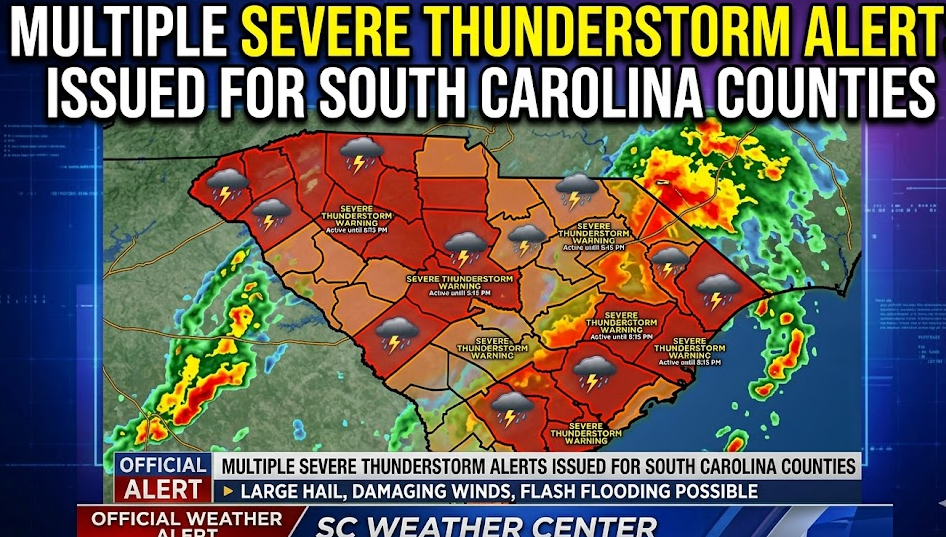
When Multiple Severe Thunderstorm Alerts Issued for South Carolina Counties appears in weather advisories, residents should take immediate notice. South Carolina’s varied climate supports dramatic afternoon storms during warmer months, and severe thunderstorm alerts signal a heightened risk of damaging winds, hail, frequent lightning, and even localized flooding. In this in‑depth guide, we explore what these weather alerts mean, why they are issued, how residents can prepare, and the science behind severe thunderstorm formation in the region.
South Carolina’s susceptibility to strong storms is well documented, especially in the spring and summer. The state’s proximity to warm coastal waters and frequent jet stream interactions create powerful atmospheric instability. A single severe thunderstorm can generate wind gusts over 58 miles per hour, hail over one inch in diameter, and torrential rainfall leading to dangerous flooding. Understanding alerts and knowing how to respond can make the difference between danger and safety for families, businesses, and entire communities.
This comprehensive article unpacks the causes behind these warnings, details county‑specific risks, features expert guidance from the National Weather Service and meteorological authorities, and shares actionable insights for residents and visitors alike. By bridging meteorological expertise with community preparedness strategies, our goal is to help South Carolina’s population stay informed, safe, and resilient.
Understanding Severe Thunderstorm Alerts
Read This :Printable Military Time Chart Mastering the 24-Hour Clock
A Severe Thunderstorm Alert is a formal notice issued by the National Weather Service (NWS) when meteorologists detect conditions favorable for severe weather. These conditions include significant wind shear, atmospheric instability, moisture convergence, and frontal boundaries. When these factors align, thunderstorms can rapidly intensify into severe events.
Alerts are often county‑specific, meaning the NWS pinpoints areas most likely to experience severe weather. In South Carolina, counties from the Lowcountry to the Upstate may be included in multiple alerts on a single day, depending on storm tracks. The presence of more than one alert simultaneously emphasizes the wide geographic reach of threatening weather patterns.
Severe thunderstorm alerts differ from watches and warnings. A watch means conditions are ripe for storm development, while a warning means severe weather is occurring or imminent. An alert often functions as a hybrid notification, quickly conveying urgency without replacing official warning status.
Meteorological Signals Behind Severe Storms in South Carolina
People can also read this article :West 34 West Kirby Menu: Flavor, Freshness, and Fire
South Carolina’s weather is influenced by multiple climatic forces. The Gulf of Mexico and Atlantic Ocean provide ample moisture, essential for storm formation. Warm, humid air rising over cooler air masses creates instability — a primary ingredient for thunderstorms. Add to this the jet stream’s strong winds at higher altitudes and you have the potential for organized severe weather.
Temperature differences along fronts also fuel storm development. In spring and fall, cold air moving south collides with warm Gulf moisture, creating powerful storm systems. Even in summer, daytime heating can trigger rapid storm growth. These atmospheric dynamics are the backbone of why multiple severe thunderstorm alerts are issued for South Carolina counties during certain weather setups.
High‑Risk Counties and Regional Impacts
Read This :Lewd Influencer Meaning, Culture, and Influence in the Digital Age
Severe thunderstorms do not affect all parts of South Carolina equally. Coastal counties like Charleston and Beaufort can encounter storms driven by marine influences, while inland counties such as Richland and Greenville may see intense afternoon and evening thunderstorms fueled by convective heat.
When multiple alerts are active, weather patterns typically involve a broad area of atmospheric instability. This means storms may develop over a large swath of the state, moving from one county to another as they evolve. Residents in all affected areas must stay alert, as conditions can change quickly.
Counties along major river basins are especially vulnerable to flash flooding during severe thunderstorms. Rivers such as the Santee and Congaree can rise rapidly, turning streets into dangerous waterways. Upland regions are more likely to suffer wind damage and hail.
What Residents Should Do When Alerts Are Issued
When multiple severe thunderstorm alerts issued for South Carolina counties, preparedness becomes paramount. Residents should monitor local media, NOAA Weather Radio, and trusted weather apps for updates. It’s crucial to stay informed even if the sky appears calm, because severe storms often develop rapidly.
Families should have a clear emergency plan that includes where to take shelter, how to communicate with loved ones, and what supplies to keep on hand. A basic weather emergency kit should include bottled water, nonperishable food, flashlights, batteries, a first‑aid kit, and a battery‑powered weather radio.
During an alert or active storm, seeking sturdy shelter indoors is essential. Heavy winds can turn loose objects into dangerous projectiles. If driving during a storm, pull over safely — severe winds and heavy rain can drastically reduce visibility and control.
For those in mobile homes, it’s especially important to have a secondary shelter plan. Mobile homes are more susceptible to wind damage than permanent structures. A community storm shelter or a neighbor’s brick home may offer safer refuge.
Science Behind Severe Thunderstorm Development

Severe thunderstorms form when warm, moist air near the earth’s surface is forced upward into cooler, drier air above. This creates strong updrafts — powerful rising columns of air that fuel thunderstorm growth. As these updrafts intensify, they can generate cumulonimbus clouds, which often reach heights of over 50,000 feet.
Wind shear — the change in wind speed and direction with altitude — can organize thunderstorms into clusters or lines. These organized structures often result in damaging wind events, long‑lived storms, and a greater probability of severe impacts. In South Carolina, wind shear can be enhanced by approaching storm systems from the west or northwest, especially in the spring.
The presence of atmospheric instability is measured using parameters like the Convective Available Potential Energy (CAPE) and Lifted Index. Higher CAPE values indicate more potential energy for storm growth. Meteorologists closely monitor these values when issuing severe thunderstorm alerts, particularly when multiple counties are involved.
Real‑Time Monitoring and Communication Tools
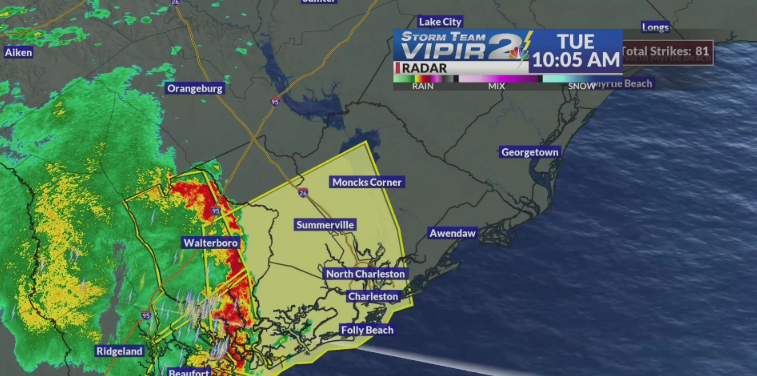
Thanks to modern technology, residents can access real‑time weather data. Weather radars show storm movement, intensity, and potential hazards like hail cores or wind‑blown debris. Many smartphone apps provide push notifications when alerts are issued for specific counties.
Local emergency management offices often use social media, text alerts, and community sirens to communicate imminent weather threats. It’s advisable to subscribe to local alert systems so you receive timely warnings. Schools, workplaces, and public venues in South Carolina may also have automated notification systems during weather emergencies.
Understanding the terminology used in alerts is crucial. Terms like “severe thunderstorm warning,” “flash flood warning,” and “tornado watch” all have distinct meanings and require different actions. Educating yourself and your community increases overall safety and helps avoid confusion during critical moments.
Historical Context: Severe Thunderstorms in South Carolina
South Carolina has a long history of impactful severe weather. While hurricanes often garner national headlines, severe thunderstorms contribute significantly to weather‑related damage annually. These storms can produce straight‑line winds as destructive as weak tornadoes. In some years, hailstorms and localized flash flooding cause millions of dollars in agricultural and property losses.
Understanding this historical context helps communities appreciate why alert systems are essential. Preparedness is not hypothetical; it’s grounded in decades of weather data showing repeated severe storm occurrences across the state.
Community Preparedness and Response Strategies
Communities across South Carolina have developed strategies to anticipate and respond to severe weather. Local governments coordinate with the National Weather Service to disseminate timely warnings. Emergency operation centers may activate during heightened weather threats to coordinate first responders and public communication efforts.
Schools and universities often incorporate weather safety training into their emergency protocols. Drills ensure students and staff know where to take shelter and how to remain calm during thunderstorm activity. Similarly, businesses can establish continuity plans to protect assets and personnel when severe weather threatens operations.
Community centers sometimes serve as designated shelters when extreme weather endangers vulnerable populations. It’s important for residents to know where these shelters are located and how to access them when necessary.
Actionable Insights for Homeowners
Homeowners can take specific steps to reduce risk when facing severe thunderstorms. Trimming trees and securing outdoor furniture decreases the likelihood of wind‑blown debris. Installing impact‑resistant roofing and reinforcing garage doors can help withstand high winds. Storm drains should be kept clear to minimize localized flooding near foundations.
Households should consider investing in surge protectors to prevent electrical damage during lightning strikes. Protecting valuable electronics and infrastructure is an often‑overlooked aspect of thunderstorm preparedness.
Pets and livestock also require attention. Secure shelter for animals protects them from hail, wind, and falling objects. Ensuring adequate food, water, and safe confinement prevents distress for animals during serious storms.
Economic and Infrastructure Impacts
Severe thunderstorms can affect more than personal safety; they also influence broader economic and infrastructure systems. Power outages are common consequences of strong winds and lightning. Utilities often deploy crews across affected counties to restore service, but prolonged outages may occur during widespread severe weather events.
Transportation routes may become impassable due to flooding or falling debris. Road closures and delays impact commuters, freight distribution, and emergency response times. Businesses reliant on transportation networks can experience disruptions affecting supply chain continuity.
Insurance claims related to wind and hail damage rise substantially in periods when multiple severe thunderstorm alerts issued for South Carolina counties become frequent. Residents should review their coverage plans, understand deductibles, and document property conditions before storms occur.
Expert Recommendations for Staying Safe
Weather experts emphasize early awareness and prompt action. When multiple counties are under severe thunderstorm alerts, the risk of rapid storm initiation increases. Therefore, monitoring conditions throughout the day — not just when radar indicates immediate danger — is critical.
Experts also advise against underestimating seemingly mild storms. Severe weather can intensify quickly under the right atmospheric conditions. Having a weather radio with a battery backup ensures continuous access to updates. Experts stress that weather alerts are not recommendations but instructions for safety.
Communicating with neighbors and forming community awareness networks can also enhance resilience. Informal neighborhood alert systems help disseminate information to those who may not be actively monitoring weather updates.
Summarizing the Importance of Weather Awareness
When Multiple Severe Thunderstorm Alerts Issued for South Carolina Counties, it reflects a complex interplay of atmospheric dynamics capable of producing hazardous conditions across a broad region. Residents and visitors alike benefit from understanding how alerts are generated, what they mean, and how to prepare effectively.
By combining expert meteorological knowledge with practical actions, individuals and communities can reduce the risk of harm and property loss. Education, preparedness, and proactive responses are the foundation of weather resilience.
Staying informed — through official weather services, community alerts, and trusted news sources — empowers people to make smart decisions during severe weather. South Carolina’s diverse landscapes and weather patterns may be beautiful, but they can also pose serious challenges without proper awareness and action.
Conclusion
Severe weather is a reality for many living in South Carolina. With multiple severe thunderstorm alerts issued for South Carolina counties, understanding how storms develop, what hazards they pose, and how to prepare can save lives. Being proactive before, during, and after a storm enhances personal and community safety. As weather technology and forecasting continue to advance, staying connected to reliable information sources remains key. Taking thunderstorm alerts seriously ensures that families, businesses, and infrastructure are better equipped to withstand nature’s powerful forces.
FaQs
What exactly qualifies a thunderstorm as “severe”?
A thunderstorm is classified as severe when it produces hail one inch in diameter or larger, wind gusts of 58 mph or greater, or tornadoes. South Carolina storms can produce any or all of these threats.
How quickly can a severe thunderstorm develop?
Storms can form and intensify rapidly under the right conditions, sometimes within 30 minutes of atmospheric triggers like heat or frontal boundaries.


1 Comment
Pingback: R Not Connecting to Internet Ubuntu – Complete Fix Guide